


Now that you’ve hopefully had a chance to exhale after Easter, it’s time to look back at what really worked (and what fell flat) across thousands of church websites. We’ve picked out 5 practical ways to improve your church website right now, based on real data that will help you prepare for a more successful Easter next year.
1. Prep for your busiest weekend
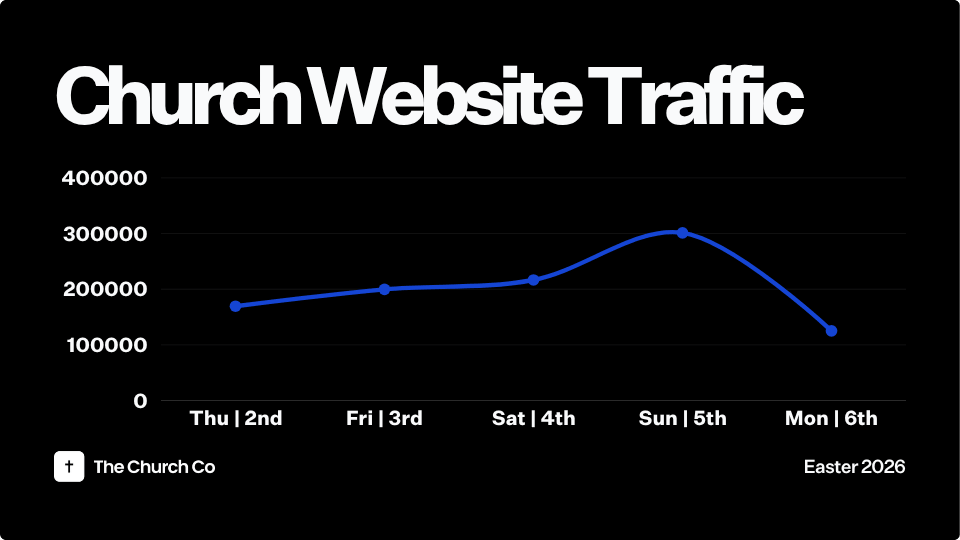
Easter Sunday 2026 recorded the highest-traffic. EVER.
This Easter, our church websites saw an incredible surge in engagement, reaching a record 890,000 users. That’s a massive jump of 270,000 users compared to last year’s numbers. Our busiest day ever recorded was Easter Sunday, highlighting the massive potential for your church to connect with people during this season. Church life is busy, but if there’s any time to ensure your website is fully optimized and ready to welcome new visitors, it’s during the crucial weeks leading up to Easter.
2. Optimize for newcomers
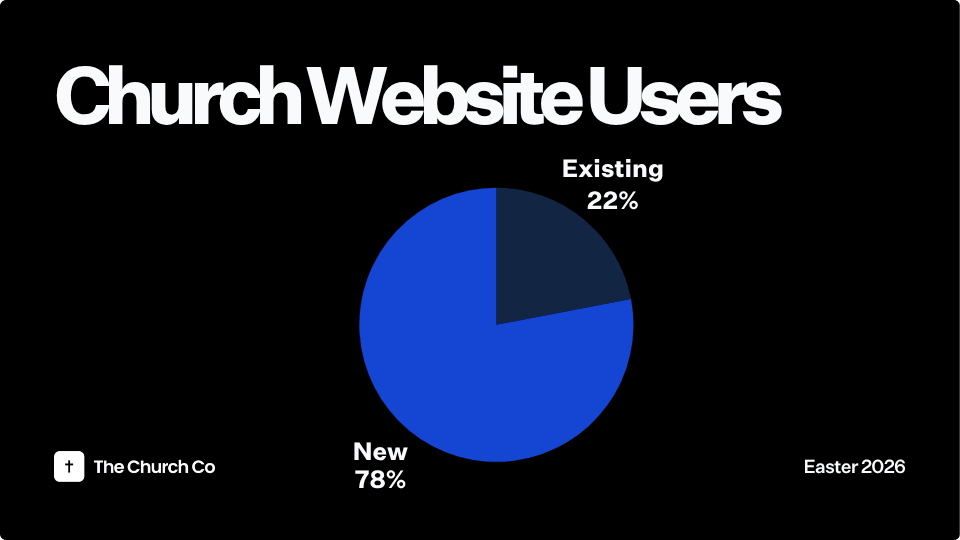
78% of church website users were new people.
Most of the people coming to your website are seeing your church for the very first time. Are you ready for them? Ensure your homepage clearly displays service times, locations, and a clear call to action like a button to “Get Directions” or “Plan a Visit.” Is the wording on your site easy for new people to understand, or does it cater primarily to those who’ve been there for years? A welcoming website makes it that much easier for someone to walk through your doors.
3. Lean into what works
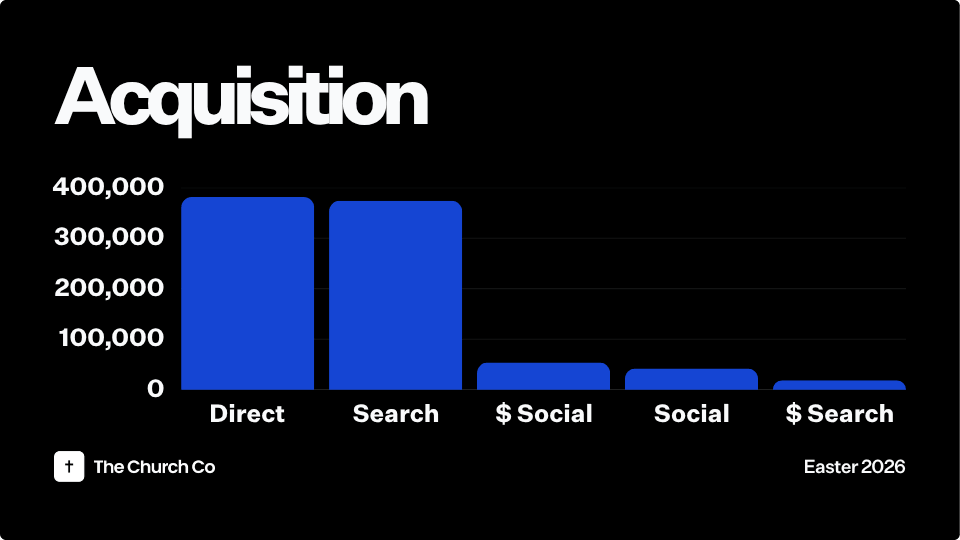
Google Search was the leading source for website traffic.
Want to reach more people? A great place to start is to look at where your current visitors are coming from and optimize that pathway for even stronger results. Because Google Search was the primary driver for Easter traffic, the first priority for every church should be improving SEO and running free ads through the Google Ad Grants program. Strengthening your SEO not only puts you higher in the search results but is also the most effective way to improve your visibility in AI searches like ChatGPT.
4. Design for mobile first
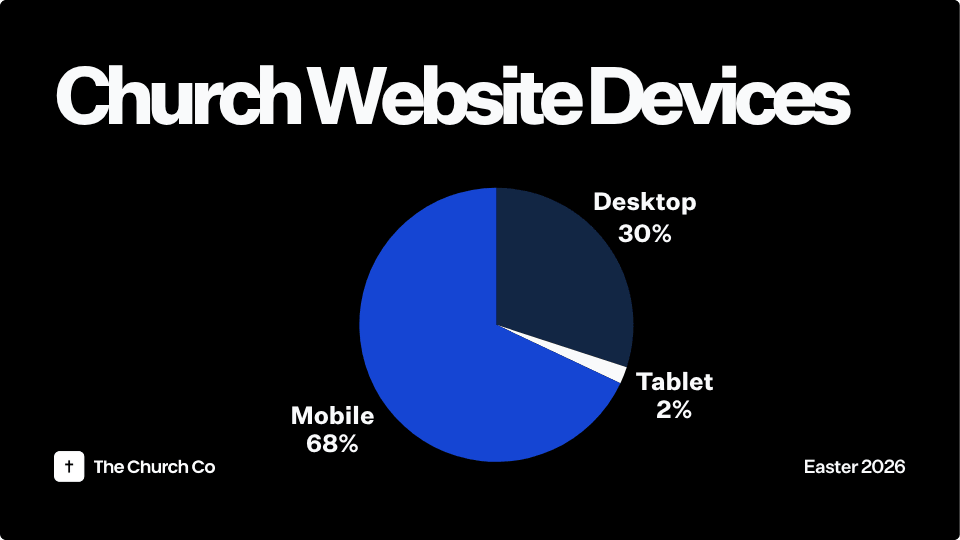
68% of people visited church websites on mobile.
A newcomer’s first impression usually happens on a smartphone. By designing your website with mobile in mind, you can make it easier for them to find the info they need and navigate to their next step. To create a great mobile experience, ensure your site loads fast, uses large touch-friendly buttons, and places essential info like service times near the top of the page.
5. Stop starting from scratch
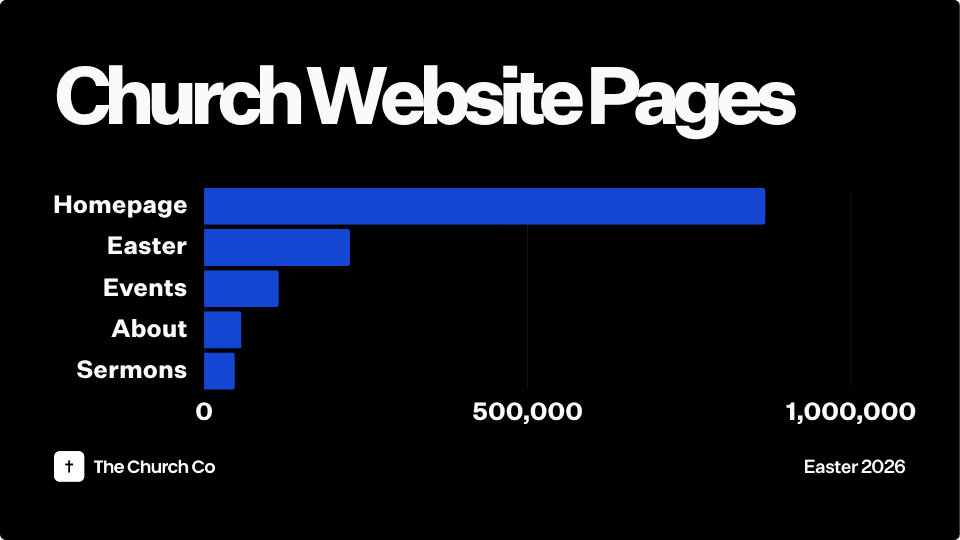
Easter was the top page viewed outside of the homepage.
Don’t throw away your SEO progress by starting a new Easter page every spring. Keeping the page up year-round retains your authority with Google, ensuring you’re near the top of the results when people start searching for Easter again. Just update the dates and details as necessary, and keep the page subtly linked from your events page during the rest of the year.
Final Thoughts
A well-optimized website can support your church’s growth by providing a clear path for people to connect with your ministry and take their next step of faith. Whether you’re with The Church Co or not, feel free to message us with any questions you have. We consider our work a ministry first, so we’d love to help you find the answers and direction you need to see your ministry grow.